Share
Sharing and permissions
A diagram is only useful if the right people can open it, and only safe if the wrong people cannot. Datadef projects are private by default: you invite people with a role, editors work with you on the same canvas, and viewers see without touching. A public link exists for everyone else, and it is strictly view only. This page states the exact rules.
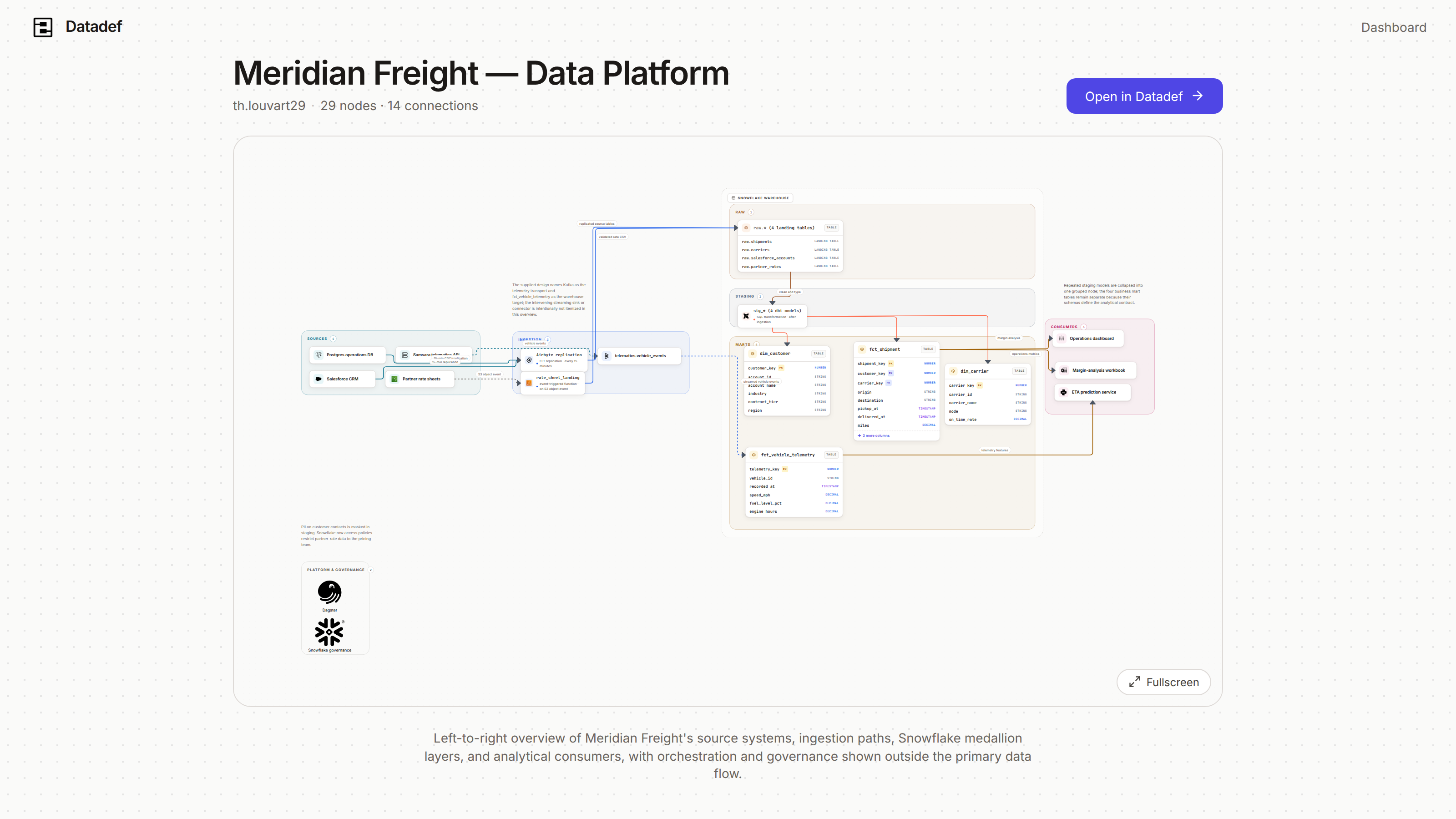
How it works
- 1Open the Share dialog on the canvas and invite people by email or @username, choosing viewer, editor, or admin as you invite.
- 2Invited editors join you on the same canvas and changes are saved to the same document, so nobody merges diagram files.
- 3When the whole world may see it, switch the project to Anyone with the link: visitors get a view-only page, no sign-in required.
- 4Switch it back to invite only at any time; the public link stops resolving immediately.
Roles
| Role | Can do |
|---|---|
| Owner | Everything: edit, manage members, toggle public access, delete the project. |
| Admin | Edit, plus manage members and invitations. |
| Editor | Edit the diagram. |
| Viewer | View the diagram and its versions. No changes. |
Invite people from the Share dialog on the canvas, by email address or @username, choosing their role as you invite.
The role is the whole answer
What someone may do on a project comes from the role you gave them, and from nothing else. Invite anyone with a Datadef account as an editor and they edit, whatever they have or have not bought.
The public link
The owner can switch a project from Invite only to Anyone with the link. The rule to remember:
Anyone with the link is view only
A public link never grants editing. Visitors can open, pan, and zoom, without signing in. Editing requires being invited as editor or admin, and signing in. There is no link that makes strangers editors.
- Turning on public access is owner-only.
- The Share dialog offers two URLs: the preview link, which anyone can open while the project is public, and the editor link, which opens the real canvas and only works for signed-in invited members.
- Public access is also what embeds are built on: turning it off breaks every embed of the project.
- Signed-in visitors who can view but not edit get a request-access button; the owner decides.
What billing changes about sharing
Nothing. Sharing, public links, and embeds are included with every account, so there is no plan to keep active and no state a project can fall into where collaborators lose what they had. An empty credit balance pauses AI generation and touches nothing else: your editors keep editing by hand, your viewers keep viewing, and every public link keeps resolving.
The one subscription that exists is the team workspace, and it changes where projects live rather than who may open them. See Teams and folders and Credits and billing.